The Americas (Connection and Impact)
Essay
Philadelphia has occupied a central place in the history of the Western Hemisphere. While the Atlantic provided a lifeline to the region’s early European residents, connections to the north, south, and west proved critical, too. Philadelphia served as a refuge for exiles and migrants from across the Americas while also providing a launching pad for Anglo-Americans who sought to survey and subdue its territories and peoples. The Delaware Valley, shaped by great power rivalry, became a political, intellectual, and cultural capital of New World republics. From the nineteenth century onwards, it transformed into an industrial behemoth that drew migrants to its factories and sent out to American markets the goods they produced. And in the twenty-first century, with Spanish as its second most-spoken language, the region maintained its strong hemispheric connections.
Early Colonization and Migration
The Seven Years’ War (1754-63) solidified Philadelphia’s status as a major continental center. When great power rivalries spilled over into war in the Great Lakes and Mississippi Valley, Philadelphia—despite its large population of Quaker pacifists—provided men and materiel for the British in their struggle against the French. Desperate for more men, the British asked the Lenape to fight for them in exchange for lands in the Ohio River Valley. The Treaty of Easton in 1758 resulted in another wave of displacement for the remaining Indigenous populations in the Philadelphia region. Even though Philadelphia stood far removed from the front lines, the struggle for control of North America profoundly affected the city, which served as a launchpad for Brigadier General John Forbes’s (1707 – 59) assault on Fort Duquesne in 1758 and gave the British control over the Ohio Valley. Amid the fighting between European empires and Native American nations, the city became a home to displaced people. In 1755, the British expelled the French Acadian population that lived in what is now Nova Scotia. Aproximately 450 Acadians fled to Philadelphia. Confined to “French houses” at Sixth and Pine Streets, the Acadian population in the city unnerved the British colonial population. New arrivals also came from western Pennsylvania, where the war had pitted Native American allies of the French against Protestant settler colonials. After France’s surrender, Indian nations continued to resist British American settlement in the backcountry, leading to a conflict in which Scots -Irish Presbyterians known as the Paxton Boys massacred a Conestoga community in Lancaster County before marching on Philadelphia. William Penn’s (1644 – 1718) earlier hope of peacefully settling the portion of the continent allocated to him by the English crown had given way to murderous violence.
Philadelphians did not just see the Americas as an arena for geopolitical struggle; the hemisphere also provided them with a laboratory. Influenced by Enlightenment ideas, Philadelphians pursued an interest in natural philosophy, or science, of the world around them. Founded by Benjamin Franklin (1706 – 90) and a handful of associates in 1721, the Junto, or Leather Apron Club, provided a forum for discussion of such matters. From this foundation local scientific societies like the American Philosophical Society (established in 1743) supported efforts to map and classify the continent. Taking advantage of trade routes to the Caribbean, South America, and Canada, naturalists and botanists like John Bartram (1699 – 1777) traveled the world to study, label, and collect plant and animal species. Franklin, Charles Willson Peale (1741 – 1827), and others acquired specimens and knowledge from across the Americas, and institutions such as the University of Pennsylvania Medical School became centers of learning that over the course of the nineteenth century drew students from distant parts of the hemisphere. The Cuban physician Juan Guiteras (1852 – 1925), for instance, completed his training in Philadelphia in 1873, before becoming a leading figure in the Pan-American Medical Congress twenty years later.
If education linked early Philadelphia to the Americas, so too did enslavement. The sugar trade in the eighteenth century brought Delaware Valley merchants into close contact with Caribbean enslavers. About one in five vessels from foreign ports during the 1790s came from the island of San Domingue, which up to that point had been a French colony. Stephen Girard (1750 – 1831), a French-born merchant who became one of Philadelphia’s most generous benefactors, had spent time on the island, where he claimed ownership over an enslaved woman called Hannah (unknown). Despite Pennsylvania’s gradual emancipation law, Hannah remained his property after he relocated to Philadelphia, and she only secured her freedom on Girard’s death.
Hannah’s arrival in the 1780s presaged a much larger exile from San Domingue. When, taking advantage of the dislocation caused by the French Revolution, enslaved people launched a revolt on the island, white planters sought refuge in Philadelphia. An influx of refugees, often with the men and women they enslaved in tow, arrived in the summer of 1793, mere weeks before the infamous yellow fever outbreak plagued the city that autumn. While the enslaved people were forcibly relocated and integrated into the region’s growing Black population, the Haitian planters brought with them warnings of servile insurrection. Yet in 1798 an emissary from the revolutionary leader Toussaint L’Ouverture (1743 – 1803) traveled to Philadelphia to meet leading figures in the administration of President John Adams (1735 – 1826) laying the groundwork for three years of strong relations between the United States and San Domingue’s insurgent leadership, before the Virginian President Thomas Jefferson (1743 – 1826) reversed course. The Haitian Revolution, which established a Black republic in the Western Hemisphere, invited Philadelphians to ponder the limits of their own revolutionary tradition: Were the “self-evident” truths Jefferson enunciated in the Declaration of Independence universal?
Revolutionaries elsewhere in the hemisphere thought so. Over the following decades, the Philadelphia region’s role in a struggle against that crown made it a beacon for other Americans battling for autonomy. The success of the United States in breaking with Britain inspired leading figures in Spanish American independence movements between 1808 and 1833. Restless subjects of the Spanish empire found inspiration and support on the banks of the Delaware River. As the Napoleonic wars weakened Spain’s grip on its American possessions, Philadelphia sheltered political exiles from its colonies, published books by leaders of independence struggles, and became a site where Spanish-Americans could see republicanism in action. By 1811, a Peruvian had published the first Spanish translation of Tom Paine’s (1737 – 1809) Common Sense, an anti-monarchist pamphlet written in Philadelphia that had electrified the colonies in 1776.
Yet over the following decades, learned Philadelphians assembled evidence they had gathered from encounters with Indigenous, Black, and Spanish people from across the Americas to suggest that liberty had strict racial limits. White Philadelphians, who maintained connections to regions of the Americas that depended on enslaved labor, also used the continent’s peoples to develop a pseudoscientific understanding of race. Samuel G. Morton (1799 – 1851), a scientist with ties to the Academy of Natural Sciences, became a prolific collector of human remains from across the continent. His 1839 publication, Crania Americana; or, A Comparative View of the Skulls of Various Aboriginal Nations of North and South America, used craniology to categorize the hemisphere into a hierarchy of peoples. His theory that humanity divided into several subspecies— – known as polygenecism— – provoked fierce debate in a Delaware Valley divided over slavery. Published five years after enslaved people had won their freedom in the British West Indies, Morton’s book seemingly showed that Black Americans stood as both separate and unequal from the white race, thus providing an intellectual rationale for their subjugation. Abolitionists in the Philadelphia region, like their counterparts elsewhere in the Union, rejected polygenesis and emphasized the common origin of humankind. Morton’s work nevertheless acquired wide influence among proslavery theorists eager to justify the South’s “peculiar institution” at a moment in which U.S. slavery seemed an outlier in the hemisphere.
Violence and Disorder in the Nineteenth Century
While Philadelphians boasted of their city’s contribution to liberty, they often endorsed schemes for western expansion. The Louisiana Purchase of 1803, which doubled the territory claimed by the United States, prompted efforts to bring the Mississippi Valley and its inhabitants under U.S. control. Just a year after the acquisition from France, the American Philosophical Society sponsored an expedition led by Merriwether Lewis (1774 – 1809) and William Clark (1770 – 1838), who set out to survey the natural history of the territory and demonstrate U.S. sovereignty. Near the mouth of the Mississippi River, 280,000 acres of Louisiana Purchase land came into the hands of the French-born Philadelphia merchant Girard, who left a share of it to the municipal government in his will, ensuring his adopted city would profit from the expansion of U.S. plantation slavery in the vicinity of the Gulf of Mexico.
Just as in the Seven Years’ War, the question of land rights that resulted from attempts to surveying and subdue the South and West led to bloodshed, this time pitting white Americans colonizers against Indigenous communities and Mexicans. The Mexican-American War (1846-48), which concluded in the annexation of California and the Southwest to the United States, became one of the most controversial in American history and divided opinion in the Philadelphia region. Philadelphians of abolitionist and antislavery leanings warned that the conflict threatened to expand an empire for slavery. Nativists hostile to immigration cautioned against bringing a large Catholic population into the republic. Nevertheless, pro-war sentiment in the age of “Manifest Destiny” proved strong, too, and Pennsylvania sent six regiments to the conflict. Even the utopian socialist Philadelphian novelist George Lippard (1822 – 54) celebrated the continental conquest in his Legends of Mexico (1847), a paean to the war hero and future president General Zachary Taylor (1784 – 1850).
The conflict overlapped with Philadelphia-sponsored projects to tie the continent together under U.S. sway. Irish Catholics in the region sometimes supported efforts to make the British provinces in Canada part of the American republic. The Irish Republican Brotherhood movement, better known as the Fenians, held a convention in Philadelphia in 1865 that heard calls for the invasion of the nation’s northern neighbor as part of a wider strategy to liberate Ireland. A year later Fenians launched a failed assault on Canada, which strengthened support for the creation of a Canadian confederation in 1867. The Fenians’ military adventurism had little support outside the region’s Irish Catholic population, but Philadelphians looked for other ways to extend American power. Soon after the conclusion of the Mexican War, ships began to leave the Delaware waterfront for the arduous passage through the Magellan Straits to newly-acquired and mineral-rich California. They returned with gold that contributed to the economic prosperity of the early 1850s. By then Philadelphians regularly imagined that their city would serve as the eastern depot of a railroad that would traverse the North American continent and save the time-consuming sea voyage. As the nation went to war with Mexico in 1846, Philadelphians secured a charter for the Pennsylvania Railroad, which would provide an unbroken rail link to the Ohio Valley at Pittsburgh, the first chain in “iron bonds” that some anticipated would soon reach the Pacific. The Pennsylvania Railroad grew over the following decades into a corporate behemoth and the largest private enterprise in the world. Its post-Civil War president, Thomas Scott (1823 – 81), briefly ran the Union Pacific, which linked Eastern railroads to the Pacific and sparked further conflict with Native Americans over whose land it trespassed.
The steam power that enabled the U.S. to conquer the continent also accelerated Philadelphia’s industrial transformation. Opportunities for employment in manufacturing and the search for markets for the region’s goods forged new hemispheric links. While nineteenth-century migration from the Americas to Philadelphia did not approach European levels, a small Spanish-American community established itself in the late nineteenth century, with exiles from war-torn Cuba particularly prominent. The tobacco and sugar trades that linked Philadelphia and the Caribbean in the colonial period provided a long-established connection to entice migration. Cubans often found work in cigar manufacturing, where they were numerous enough to have a Spanish-speaking labor union in 1877. Immigrants sometimes labored in the oil and coal industries, too, while the city’s locomotive building companies employed workers from Cuba, Puerto Rico, and other Latin American communities. Spanish-speaking communities coalesced in the Northern Liberties, Spring Garden, and Southwark areas of Philadelphia. There, Cubans especially often joined the fight for independence from Spain. Cigar -makers became active in the Partido Revolucionario Cubano (PRC) that organized in Tampa, Florida, in 1892 and called for autonomy for their homeland and the nearby Spanish colony of Puerto Rico. Six PRC clubs organized in Southwark alone prior to the Spanish-American War.
Goods as well as revolutionary politics fanned outwards from Philadelphia across the Americas in the nineteenth century. The Philadelphia mint produced coins for Panama. Steam engines went to Brazil and Chile, the latter purchasing South America’s first train from the Norris Works in 1850. Seven years later, the Baldwin Locomotive Works at Broad and Callowhill responded to depressed domestic demand by trying to drum up business in Cuba, where despite the antislavery politics of its founder Matthias W. Baldwin (1795 – 1866), its engines were employed in transporting sugar cane grown by enslaved people. After 1885, when the same company distributed marketing materials to Spanish-speaking countries in the Americas, it enjoyed some success in eroding Britain’s near monopoly in the region. The nineteenth-century industrial revolution—along with the U.S. victory in the Spanish-American War of 1898—expanded Philadelphia’s influence and reach. Philadelphia produced goods for export to Central and South America while offering work and shelter to the region’s mobile population.
Twentieth and Twenty-First Centuries: A Continued Sanctuary of Opportunity
Following war with Spain in 1898, which solidified the military and economic ascendancy of the United States in the Americas, thousands of Caribbean and South American families sought out Philadelphia. By 1923 it was possible to talk of a “Spanish Colony” in Southwark that housed many of the five thousand or so Spanish-speaking residents. Two of the five major cigar factories were found in that part of the city. Like other immigrant groups, Spanish speakers established benevolent associations and sought out places of worship. The first recorded church service in Spanish in the city dates to 1909, and three years later, Spanish speakers started to attend La Milagrosa, a Catholic chapel at 1903 Spring Garden Street, initially led by a priest from Barcelona. The goods immigrants produced in Philadelphia’s factories and workshops were sometimes exported to Latin America, while Central and South America and the Caribbean shipped foodstuffs to the Delaware Valley.
Immigration restrictions between 1924 and 1965 made it much harder for Europeans to migrate to the region, which offered Latin American communities more opportunities to find a home in the U.S. Puerto Ricans, who came under direct U.S. control after 1898, became the largest Spanish-speaking community in the Philadelphia area. The push of periodic economic crises in Puerto Rico and the pull of work in the Delaware Valley’s industries and farms drew islanders to the region. The two world wars proved a particular impetus as factories looked for labor to meet heightened demand. During World War II, the federal government’s War Manpower Commission encouraged employers to turn to Puerto Rico for labor. Campbell’s Soup Company in Camden recruited workers from the island, and although some of those who responded to its call returned home in peacetime, many remained in the region. The rapid wartime growth of the region’s Puerto Rican population put down a foundation for further migration over the second half of the twentieth century to Philadelphia and Camden especially. World War II also brought Mexicans to Philadelphia to work in agriculture and for the Pennsylvania Railroad. Other Latinos fled due to revolutionary turmoil. After Fidel Castro (1926 – 2016) secured power in Cuba in 1959, Cuban refugees arrived in the Delaware Valley, often via Florida.
Amid these upheavals, Latinos played an active civic role in the region. Philadelphia’s Pan American Association, formed by University of Pennsylvania academics in league with prominent figures of the city’s Latino community, formed in 1940 and sought to promote harmonious relations across the hemisphere. It fostered economic and cultural ties between Philadelphia and the Americas while also providing a forum for discussing diplomatic relations. Efforts to improve the lives of local Latino residents also gathered pace. Concilio—also known as the Council of Spanish Speaking Organizations—was founded in 1962 as a Pan-Latino advocacy group that also provided social services. Puerto Ricans in Camden started what became an annual San Juan Bautista Parade, named for the patron saint of their island, in 1957. Just over a decade later some young Puerto Ricans in Camden made common cause with Black Power activists by joining sit-ins and protesting police mistreatment.
Immigration from the Americas accelerated as the twentieth century entered its twilight years. As Cold War fears led the United States to interfere in the affairs of several Central and South American countries, Philadelphia remained attractive to emigrants for its economic opportunities and as a place of sanctuary from conflicts in Guatemala, El Salvador, and Nicaragua. Agriculture in the region drew considerable numbers. Chester County, which by the early 1990s produced about a quarter of the nation’s mushrooms, relied heavily on an estimated 4,000 Mexicans who made up about 90 percent of the workforce. Economic and political instability in Central and South America also pushed migrants to the Philadelphia region. The North American Free Trade Agreement in 1994 catalyzed a new wave of Central and South American immigration into the United States. By the twenty-first century, a strong Latino presence ran from long-established communities in South Philadelphia and Northern Liberties all the way up to Olney in North Philadelphia, roughly following SEPTA’s 47 bus route. In 2003, Spanish speakers could hear a mass in their own language at 21 parishes in South Jersey and 34 in southeastern Pennsylvania. Two decades later, Spanish and Portuguese were the most commonly -used languages other than English in the city.
A steady growth in Latino population allowed for a continuous, long-standing trade route that drew the produce of the hemisphere to the Delaware Valley. Into the 2000s, the ports of the Delaware River remained major importers and exporters of agricultural goods, including fruits from tropical latitudes such as pineapples and bananas. In 2011, Chile, Costa Rica, Guatemala, Colombia, Brazil, and Argentina stood in the top nine origin countries for traffic in food and related goods, while Puerto Rico and Venezuela were two of the biggest three agricultural export markets. The U.S.’s northern neighbor, Canada, also remained an important trading partner, accounting for 27 percent of Philadelphia’s exports in 2018.
After its late seventeenth-century founding as a colonial port city, Philadelphia provided a home for displaced French Canadians, enslaved Haitians, and exiled Spanish-American revolutionaries, while offering a market for the commodities the continent produced. As Philadelphians accommodated newcomers, they also sought to extend their influence across the Americas through conquest, trade, and the pursuit of knowledge. Hundreds of years later, Philadelphia continued to attract migrants from all over the hemisphere, which could be easily seen when walking down any street. The presence of diverse migrants remained evidence of continental connections that run north, south, and west, rather than merely east across the Atlantic.
Molly Nebiolo is an Assistant Professor of History at Butler University. (Author information current at time of publication.)
Copyright 2026, Rutgers University.
Gallery
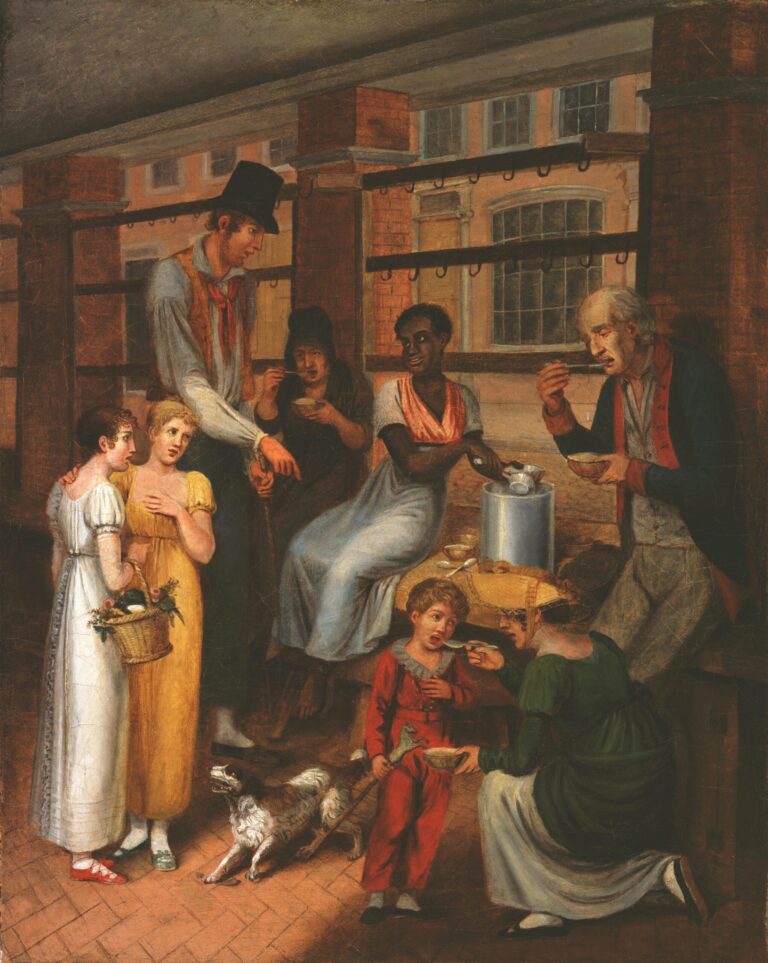
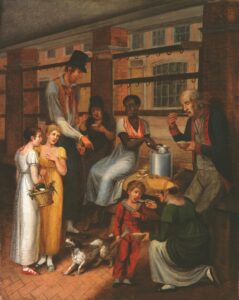
Pepper-Pot: A Scene in the Philadelphia Market
This 1811 painting by John Lewis Kimmel, “Pepper-Pot: A Scene in the Philadelphia Market,” depicts an African American woman selling Philadelphia pepper-pot within market stalls. Pepper pot did not follow a specific recipe but often incorporated both Spanish and West African food traditions which were blended through the forced migration of enslaved Africans to the Caribbean. This culinary tradition was then carried to the port of Philadelphia by enslaved Africans and often sold by free Black people in markets. The dish often consisted of tripe, or other inexpensive cuts of meat, vegetables, and a slew of spices and hot peppers, but often just whatever was on hand. This was a cheap communal dish that was accessible to poorer working-class families. This dish, just like the cheesesteaks of today, became an iconic staple of Philadelphia cuisine.
Philadelphia Pepper Pot eventually started falling out of public interest by the late 20th century, with even Campbell’s Soup Company discontinuing its sale in 2010 after 111 years. Many Philadelphia institutions such as the Four Seasons Hotel and the Union League of Philadelphia removed the soup from their menus. Despite this, in the 21st century there has been an effort from African American communities to revive the dish from near extinction, to maintain a vital piece of Black Philadelphian culinary tradition and history.
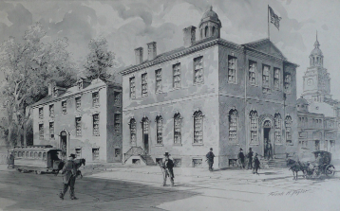
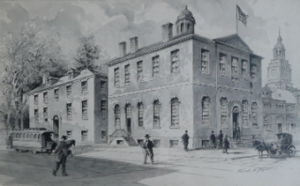
American Philosophical Society
The American Philosophical Society was founded in 1743 by Benjamin Franklin and John Bartram to promote scientific thought in the Americas independent of England. Their headquarters, pictured here in a 1919 watercolor by Frank H. Taylor, on 5th Street was the home of many 18th and 19th century intellectuals including David Rittenhouse, Charles Wilson Peale, Charles Darwin, and Thomas Edison.
The American Philosophical Society promoted scientific inquiry through sponsoring expeditions that would obtain and study various species and engage in contact with many indigenous people from across the continent. The APS sponsored and mentored Meriweather Lewis and William Clark before their expedition to the American West in exchange for plant and animal specimens for scientific study. The APS outlined many of the scientific aims of the United States first expedition circumventing the globe, The Wilkes Expedition (1838-42), to map the Western Hemisphere and the expansion of American industry and commerce. The American Philosophical Society sent some of their own members such as Titian R. Peale (son of Charles Wilson Peale) and Charles Pickering as Naturalists to conduct research throughout and bring back specimens and paintings.
Over the institution’s 300-year history its aims have broadened to encompass a wider breadth of intellectual thought. While early endeavors of the American Philosophical Society were focused on the work of early “naturalists” or scientists, the society has expanded to drawing membership from historians, philosophers, and poets.
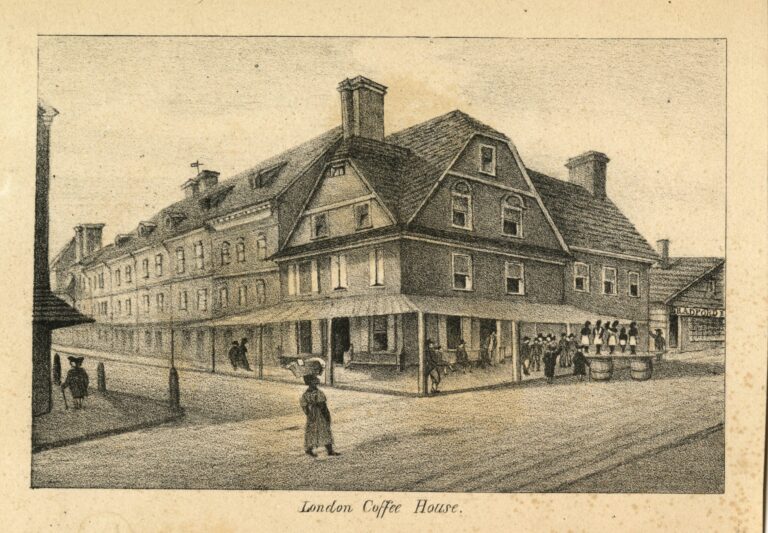
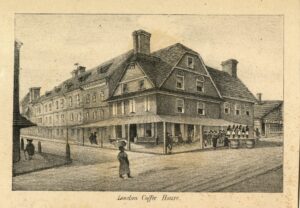
London Coffee House
Library Company of Philadelphia
Philadelphia’s port stood as a central trading hub for not only the trade of goods throughout the Atlantic and Caribbean, but also of enslaved people. Slave auctions, like the one depicted in this etching of the London Coffee House from 1830, dotted Philadelphia’s shoreline. A majority of enslaved people who resided in Philadelphia arrived from the Caribbean rather than directly from Africa, with the first recorded shipment of enslaved people to the region arriving in 1664 by the Dutch West India Company. This shipment, consisting of both Caribbean and African enslaved people, was intended for New Amsterdam but many of them were held to stay in New Amstel (present day New Castle, Delaware), setting the foundation for an African American presence and enslaved labor in the region.
Coffeehouses, such as this one on Front and Market, were public hubs for entertainment, intellectual discussion, and commerce. These sites facilitated conversations regarding both race-based slavery and abolitionism alongside the space in which enslaved people were bought and sold. Slavery in Pennsylvania was predominantly in urban areas where over half of the slaveholders in the city held only a single adult slave where they were often forced to do domestic labor for both elites and merchants, shopkeepers, or mariners. This structure of slavery isolated and deprived African Americans of their communities. Slavery within the colony proliferated until the introduction of a heavy levy on importation in 1773 and the Gradual Abolition Act of 1780. As slave labor was falling out of favor, the number of free Black people within the city grew rebuilding their own communities to counteract the isolation of domestic slave labor. By 1820 10% of Philadelphia’s population was made up of free African Americans and they had formed many institutions such as the Free African Society (1787) or the Mother Bethel AME Church (1816). African American communities maintained their importance in the Philadelphia landscape including the Seventh Ward which became the focus of W.E.B. Du Bois’ famous sociological study The Philadelphia Negro (1899).
Henry Clay and Bock & Company Cigar Factory
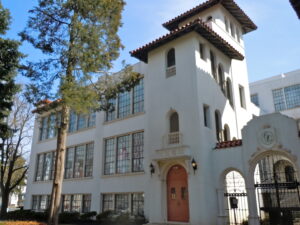
Cigarmaking has a long history within the Greater Philadelphia region, and by the early 20th century Philadelphia was considered the center of United States cigar production. Puerto Rican and Cuban migrants brought with them many cigar companies and by the turn of the century over 900 factories were in the city mainly concentrated within the Latino communities of Southwark. Philadelphia was home to some of the most successful and prominent American cigar companies such as Theobold & Oppenheimer (1860) and the Bayuk Brothers Tobacco Company (1896) who manufactured “Philadelphia Hand Made Perfectos” or “Phillies.”
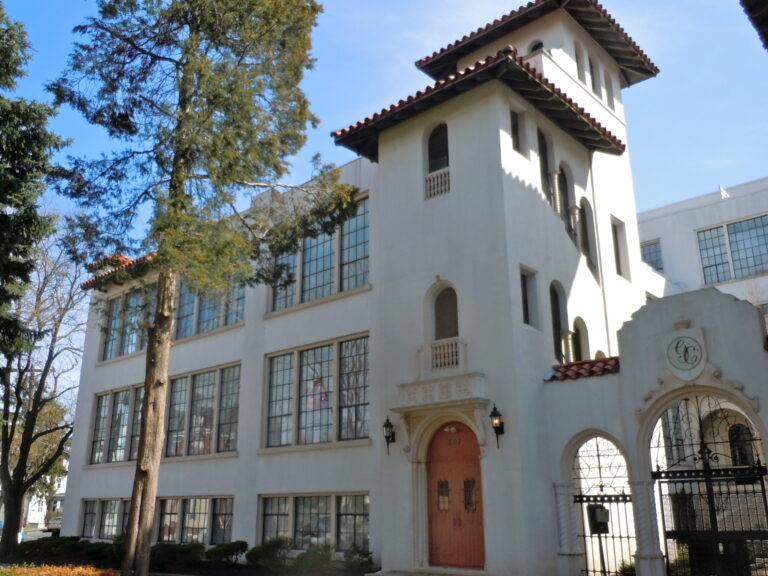
Cigar production in the region was not just limited to Philadelphia, as both Camden and Trenton had their own respective industries and factories. The Henry Clay and Bock & Company factory (pictured above in 2011), built in 1932 in the Chambersburg neighborhood of Trenton, was owned by the American Cigar Company and was described as “the most modern cigar rolling plant in the world.”
In 1901 The American Tobacco Company, seeking to avoid high import dues and looking for expanding markets, decided to move their manufacturing to the United States from Cuba. This brought the production of many famous Cuban such as La Corona, which had been operating as a family business on the island since 1845, to New Jersey. To maintain their status as a fine Cuban cigar, the growing and processing of its tobacco remained in Havana rather than from regional farms such as in Lancaster, Pennsylvania or New Castle County, Delaware. To emphasize their Cuban origin, the Spanish Colonial Revival architecture of the factory resembled a tropical hotel including clay tiles, faux balconies, and a large pool. The factory was closed in 1967 as operations moved to a new factory in Pennsylvania and now has been repurposed as residential lofts.
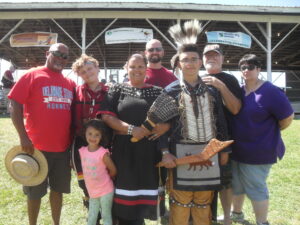
Nanticoke Lenni-Lenape Presence
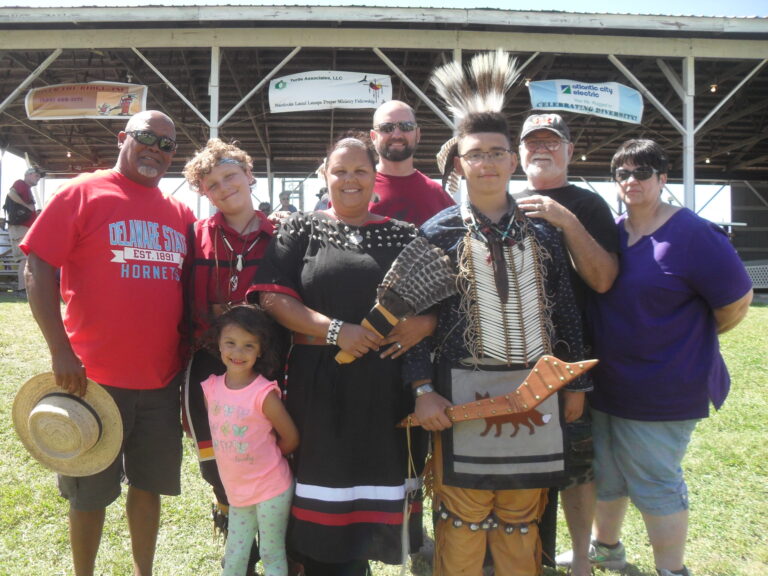
The Nanticoke Lenni-Lenape People are a tribal confederation of core Nanticoke and Lenni-Lenape families residing in the Greater Philadelphia region since antiquity. The Lenape peoples historically resided in Delaware, eastern Pennsylvania, New Jersey, and southern New York. European colonists from the Netherlands, Sweden, and eventually England introduced mass disease and displaced tribal communities which disconnected large populations of the Lenape from their homeland. The Nanticoke or “Tidewater People” were originally from the Delmarva peninsula, but due to colonial interference many Nanticoke migrated up the Delaware River and into greater contact with the Lenape. Despite this, many Nanticoke and Lenni-Lenape people have been determined to maintain connection to their ancestral land to this day. Families have remained in or returned to South Jersey in order to maintain their tribal identity through kinship ties and inherited traditions.
In 1982 the state of New Jersey officially acknowledged the Nanticoke Lenni-Lenape tribe as one of three state recognized tribes, but they still lack federal recognition. The Nanticoke Lenni-Lenape Tribe’s current headquarters are located in Bridgeton, New Jersey where they provide cultural, educational, health, nutritional, and outreach initiatives and maintain their tribal practices. The annual powwow attended by tribal members, depicted in this 2016 photograph, promotes cultural exchange and ensures that indigenous traditions continue to stay alive.