Essays
Abolitionism

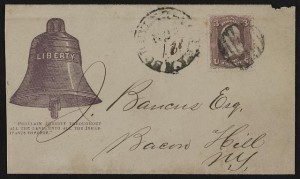
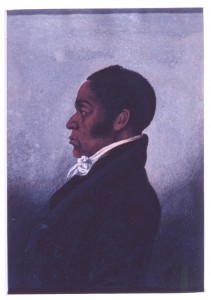
Few regions in the United States can claim an abolitionist heritage as rich as Philadelphia. By the time Boston abolitionist William Lloyd Garrison launched The Liberator in 1831, Philadelphia's confrontation with human bondage was nearly 150 years old.
AIDS and AIDS Activism

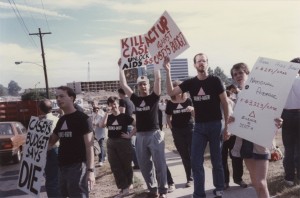
Doctors in Philadelphia diagnosed the first local case of what would later become known as AIDS (Acquired Immune Deficiency Syndrome) in September 1981, just months after the Centers for Disease Control first reported mysterious outbreaks in New York and Los Angeles that marked the beginning of the recognized AIDS epidemic in the United States.
American Bandstand

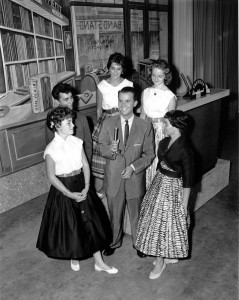
American Bandstand (1952-89) was a massively popular music television program with strong Philadelphia roots, storied national success, and the power to shape the music industry and society. Particularly during the show’s prime Philadelphia years (1952-63), Philadelphia youth culture became American culture through American Bandstand.
American Civil Liberties Union (ACLU)
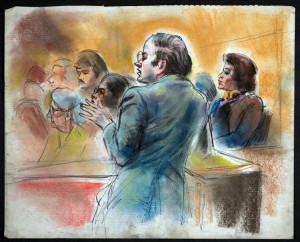
The American Civil Liberties Union, a national legal organization dedicated to the defense and preservation of civil liberties in the United States, has been organized in the Philadelphia region since 1951, when chapters formed in Pennsylvania and New Jersey as part of a move toward establishing branches throughout the nation. Both chapters played a role in the civil liberties history of the region.
Athens of America (Theme Essay)

In the decades after American independence, the atmosphere of liberty in Philadelphia spawned an artistic spirit that earned this city its reputation as the Athens of America. Here, enthusiasm for the arts grew with the same fervor and in the same houses, streets, and shops where the seeds of political freedom had been sown and cultivated a generation earlier. Philadelphia began to grow into a vibrant, varied, and long-lasting center for arts and culture.
Banking

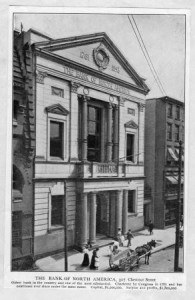
Greater Philadelphia’s banking roots go deeper than those of any region in the country. By the late twentieth century, however, historic regulatory changes led to acquisitions by out-of-town giants and changed the face of the banking industry both locally and nationally.
Centennial Exhibition (1876)

Modeled after the Crystal Palace Great Exhibition in London, and the first in a long line of major world’s fairs in the United States, the Centennial Exhibition in 1876 exhibited national pride and belief in the importance of education and progress through industrial innovation.
Cheesesteaks

A cheesesteak is a sandwich unlike any John Montagu, the fourth Earl of Sandwich (1718-1792), might have encountered. Thin bits of frizzled beef served on a locally-made Italian roll, usually topped with fried onions and Cheez Whiz drawn from the can with a paint stirrer, the Philly cheesesteak also is distinguished, in part, by its place in presidential politics.
Children’s Television

Local children’s programming in the Philadelphia area flourished during the “Golden Age of Television,” from the rise of commercial broadcasting after World War II to the early 1970s. During its heyday the hosted children’s show was a mainstay of locally produced programming.
Cholera
City Hall (Philadelphia)

Constructed over a 30-year period at a cost approaching $25 million, Philadelphia City Hall stands as a monument both to the city’s grand ambitions and to the extravagance of its political culture. Controversial from the outset--for its location, its architecture, and the patronage it commanded on behalf of its construction--the structure nonetheless came to be embraced over time as a distinctive emblem at the heart of a great city.
City of Brotherly Love (Theme Essay)
We can’t know all the thoughts that coursed through William Penn’s mind when he chose Philadelphia as the name for his new city, tucked onto the peninsula between the Delaware River and the Schuylkill. What we do know is that he chose boldly, aiming for the vault of heaven, daring irony to strike.
City of Firsts (Theme Essay)
The Convention and Visitors Bureau touts Philadelphia as “a city of firsts.” The Independence Hall Association lists five pages of “Philadelphia Firsts” on its website. A walking tour of the city links “Philadelphia Firsts” to its home page. George Morgan may have been the first to title a book on Philadelphia The City of Firsts, in 1926, but even that far back he acknowledged the research of others who had been tracking those firsts for “many years past.” Although Philadelphia lost its rank as first city in the nineteenth century, it claimed for itself the title of city of firsts.
City of Neighborhoods (Theme Essay)

While Philadelphians love their city, they particularly love those sections of their city where they were born, raised, and in many instances continue to live. Surprisingly for a city steeped in history, the neighborhood-memory of most Philadelphians extends back for only a couple of decades. Neighborhood histories sometimes become lost as populations and places change, but new histories are constantly being created.
Civil War Sanitary Fairs

Philadelphia’s Civil War sanitary fairs represented the spirit of patriotic volunteerism that pervaded the city during the Civil War. These grassroots efforts, climaxed by the Great Central Fair of 1864 in Logan Square, provided a creative and communal means for ordinary citizens to promote the welfare of Union soldiers and dedicate themselves to the survival of the nation.
Commuter Trains

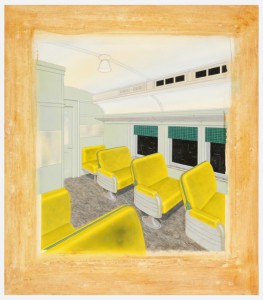
Commuter trains have helped to shape and define Philadelphia and its region since their introduction in 1832. The trains influenced suburban development and shaped Center City, and by the twenty-first century they provided a “green alternative” to crowded highways and the automobile-oriented culture of the United States.
Consolidation Act of 1854

The Consolidation Act of 1854 extended Philadelphia’s territory from the two-square-mile “city proper” founded by William Penn to nearly 130 square miles, making the municipal borders coterminous with Philadelphia County and turning the metropolis into the largest in extent in the nation, a position it held until Chicago leapt ahead in 1889.
Constitution Commemorations

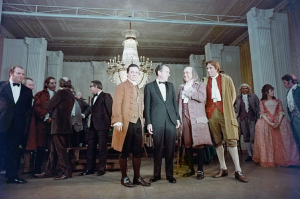
As a cause for commemoration, the signing of the U.S. Constitution historically has struggled to compete with the Declaration of Independence for national recognition and ardor. In Philadelphia, the site of the Constitutional Convention, commemoration of the document’s major anniversaries has reflected how regard for the Constitution and its connections to the city have evolved over time.
Continental Congresses
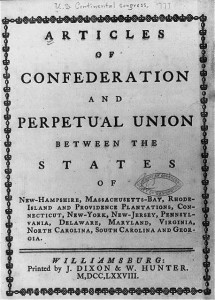
The First and Second Continental Congresses, held in Philadelphia in 1774 and 1775-81, engaged in the complex politics surrounding independence and heightened the city’s role in a world-changing moment in history.
Corrupt and Contented (Theme Essay)

In May 1903, at the height of the period of reform we have come to call the Progressive Era, crusading journalist Lincoln Steffens published the fifth in a series of articles exposing municipal corruption in the United States. His subject was Philadelphia, and to his mind it was worse than any other place he had investigated. “All our municipal governments are more or less bad,” Steffens declared. “Philadelphia is simply the most corrupt and the most contented.” How much has changed since the muckraking era? Is Philadelphia still corrupt and still contented?
Cradle of Liberty (Theme Essay)

From the days of William Penn to the civil rights movements of the twentieth century, Philadelphians have taken pride in their city as a "Cradle of Liberty" -- while also acknowledging the cracks in the cradle.
Declaration of Independence

Convening in the East Room of the Pennsylvania State House from May 1775 to July 1776, sixty-five delegates of the Second Continental Congress worked through deep political divisions to create the Declaration of Independence, which gave birth to a new nation and cemented Philadelphia’s reputation as a Cradle of Liberty.
Delaware River Port Authority

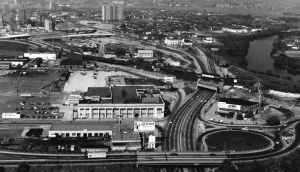
The Delaware River Port Authority (DRPA) was created nearly one hundred years ago as a bi-state commission for the purpose of building a single toll bridge. It grew into a major regional transportation agency, making major investments in infrastructure and gaining significant expertise in bridge and commuter rail operations.
Department Stores

As department stores became central to retailing in American cities in the late nineteenth and early twentieth centuries, Philadelphia played a major role. Led by John Wanamaker, whose store was a national model, the giant "Big Six" stores on Market Street helped create a new consumer culture.
Elfreth’s Alley

Nestled between Second Street and the Delaware River, thirty-two Federal and Georgian residences stand as reminders of the early days of Philadelphia. Elfreth's Alley exists today as a residential street, historic landmark, and interpreted site labeled the “Nation’s Oldest Residential Street.” The heroic efforts of residents and local historians from the 1930s to 1960s preserved the Alley as a typical colonial street, but it took decades of new scholarship for the Elfreth’s Alley Association to create an interpretation encompassing the everyday lives of all generations who lived on this street.
Flaxseed and Linen
In the colonial era linen and flaxseed were fundamental to the mercantile life of Philadelphia and the Delaware Valley. Traveling in a circle of trade across the north Atlantic, these goods forged relationships among colonial farmers, backcountry shopkeepers, and British mercantile credit systems.
Flour Milling

At the time the first European colonists settled in the Delaware Valley, few places in the world were as well-suited to the cultivation of grains. By 1750 the Delaware Valley produced such a surplus that its wheat and flour not only supplied the American market but also were exported to Europe, Africa, and the Caribbean.
French Revolution
As the French Revolution of 1789 created political, social, and financial instability throughout Europe, many terrified French aristocrats, businessmen, and intellectuals fled to the United States. Philadelphia attracted many of the French émigrés, and the revolution and its repercussions captured the attention of Philadelphians during the city's decade as the nation's capital.
Girard College

Opened in 1848, Girard College was established under a bequest from wealthy philanthropist Stephen Girard (1750-1831), whose will specified a school for “poor white male orphans.” By the mid-twentieth century the expansion of Philadelphia’s black population and the quest for civil rights led to campaigns to desegregate the school.
Green Country Town (Theme Essay)
How often have you heard people proudly call Philadelphia a “greene country towne,” quoting William Penn’s evocative description of the city he founded? Along with “city of brotherly love,” the phrase ranks as the granddaddy of all municipal brands, pre-dating “Big Apple” and “Big Easy.” Penn didn’t just talk the talk: when he laid out the street grid, he gave Philadelphia the gift of five public squares.
Historic Germantown:
New Knowledge in a Very Old Neighborhood

Located six miles northwest of downtown Philadelphia, Germantown is one of America’s most historic neighborhoods. It is also one that offers provocative examples of how people consider the past.
Holy Experiment (Theme Essay)

William Penn was convinced that he could construct a "Holy Experiment" with a well-planned settlement and a rational government. He aimed for a social contract that would bind and respect all residents, based not on coercion but on the principle of "what love can do."
Independence Hall

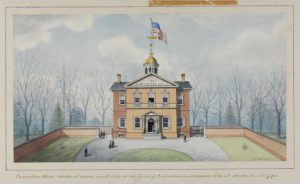
Originally the Pennsylvania State House, this eighteenth-century landmark associated with the Declaration of Independence and the U.S. Constitution evolved from a workplace of government to a treasured shrine, tourist attraction, and World Heritage Site. Its history encompasses more than 275 years of struggles for freedom and public participation in creating, preserving, and debating the founding principles of the United States.
Independence National Historical Park
Encompassing fifty-four acres in Center City Philadelphia, Independence National Historical Park preserves and provides access to Independence Hall, the Liberty Bell, and other sites associated with the American Revolution and early American history
Industrial Workers of the World

In the early 1900s thousands in greater Philadelphia belonged to the Industrial Workers of the World (IWW)—a militant, leftist labor union. Local 8, which organized the city’s longshoremen, was the largest and most powerful IWW branch in the Mid-Atlantic and the IWW’s most racially inclusive branch. The organization and its ideals lived on, revived in recent decades by activists in Philadelphia and across the country.
Influenza (“Spanish Flu” Pandemic, 1918-19)
Italian Market
Ladies Association of Philadelphia

On June 12, 1780, Esther De Berdt Reed (1746-1780), penned a broadside entitled “Sentiments of an American Woman” in order to rouse her fellow women to participate in the Revolutionary cause. As a result, dozens of women responded to Reed’s call, forming the Ladies Association of Philadelphia, a group of upper-class women who led a door-to-door campaign raising money for Washington’s Continental Army.
Laurel Hill Cemetery

Founded in 1836 as an alternative to the overcrowded churchyards of rapidly growing Philadelphia, Laurel Hill Cemetery was the first rural cemetery for the city and the second in the United States. With monuments designed by the era’s most prominent sculptors and architects, it served as elite Philadelphia’s preferred burial place for over a century.
Lazaretto

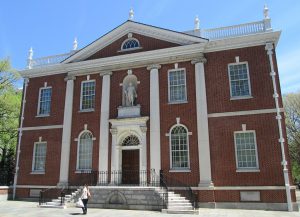
Situated roughly ten miles south of Philadelphia, in Essington, on the west bank of the Delaware River, the Lazaretto is considered to be the oldest and last surviving quarantine station in the United States.
Liberty Bell

It began inconspicuously as a two-thousand-pound mass of unstable metal; it nearly ended up in the scrap heap; it cracked and lost its voice; it was all but forgotten. But then, gradually, it became a priceless national treasure. For more than a century, the Liberty Bell has captured Americans’ affections and become a stand-in for the nation’s vaunted values: independence, freedom, unalienable rights, and equality.
Mother Bethel AME Church:
Congregation and Community

National Freedom Day

Created in 1942 by a Philadelphian born in slavery, the annual National Freedom Day commemoration each February 1 calls attention to the Thirteenth Amendment to the United States Constitution, which ended slavery, and the continuing struggle for African American justice and equality.
Northwest Philadelphia
Northwest Philadelphia, bound loosely by the Roosevelt Expressway to the south, Broad Street to the east, and the suburbs of Montgomery County to the north and west, has origins as old as the city itself. Developing around the Schuylkill and Wissahickon Creek waterways, and later Fairmount Park, the Northwest expanded and changed with the advent of new technologies and the larger legal, political, and cultural trends of Philadelphia.
Octavia Hill Association

The Octavia Hill Association of Philadelphia was founded in 1896 to provide clean dwellings at reasonable rents to some of the city’s poorest residents, who were often exploited by profit-hungry landlords. Still active as a real estate management company, the Octavia Hill Association has a history of responding to changing economic conditions and housing needs.
Omnibuses

One of the earliest forms of public transportation in Philadelphia (and its early suburbs prior to the 1854 consolidation of the city with the county) was the horse-drawn omnibus introduced in 1831. The omnibus, together with the railroad, created the first urban commuters and it effectively became the model for all future street-based public transportation development in Philadelphia.
Pennhurst State School and Hospital

During eight decades of continuous operation (1908-87), Pennhurst evolved from a model facility into the subject of tremendous public scandal and controversy before the federal courts ordered it closed and the remaining residents moved elsewhere.
Pennsylvania Emancipation Exposition (1913)
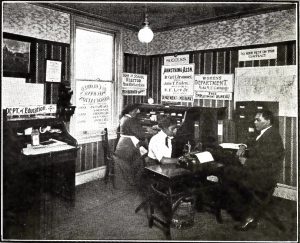
Held in 1913 in South Philadelphia, the Pennsylvania Emancipation Exposition marked the fiftieth anniversary of the Emancipation Proclamation with events and exhibits celebrating African American progress. At a time when the African American population in Philadelphia was growing and gaining in political influence, the event’s organizers also experienced a backlash of criticism as they secured $90,000 in state funds to stage the exposition.
Philadelphia and Its People in Maps: The 1790s

As Philadelphia became the Capital of the United States, the first federal census takers in 1790 counted 44,096 residents in the city and its adjacent suburbs of Southwark and the Northern Liberties, making it the most populous urban center in the new nation. Using Geographic Information Systems (GIS) technology with data from the census and the 1791 city directory, two historians have mapped the everyday life of the city.
Philadelphia Negro (The)
In 1899, the University of Pennsylvania published The Philadelphia Negro: A Social Study, the first scholarly race study of an urban place in what became a growing trend of Progressive-era social surveys. The massive report about Philadelphia's Seventh Ward became a distinctive (and still relevant) landmark in the annals of sociological study and social advocacy.
Philadelphia, the Place that Loves You Back (Theme Essay)
What does it mean if a place loves you back? That was the question posed by the 1997 tourism slogan, “The Place That Loves You Back.” This was of course not the Philadelphia's first attempt to sell itself as a tourist destination, but it marked a departure from previous attempts focused on historically significant artifacts in Center City.
Political Parties (Origins, 1790s)

Philadelphia, long considered the “cradle of liberty” in America, was also the “cradle of political parties” that emerged in American politics during the 1790s, when the city was also the fledgling nation’s capital.
Pretzels

Soft pretzels are to Philadelphia as crepes are to Paris. Both are icons of their respective cities, but one goes better with Nutella and the other with mustard. With cheesesteaks and water ice, soft pretzels complete the city's culinary trifecta.
Public Education:
The School District of Philadelphia

In 1837 the Philadelphia Board of Education—then known as the Board of Controllers—embraced “universal education” and opened the city’s publicly supported and publicly controlled schools to all school-age children, free of tuition. By the beginning of the twenty-first century, however, many Philadelphia parents had opted for suburban schools, charter schools, or home-schooling, and the School District of Philadelphia had become in many ways what it had originally been—a system for poor and disadvantaged children.
Public Housing

As the dominant response to the housing needs of low-income residents since the 1930s, public housing in the Philadelphia region provided shelter for thousands. Over the years, however, as needs as well as programs changed, the city and the region struggled to provide safe, decent, and sanitary living quarters when the private market failed to produce suitable alternatives.
School Naming
Family names and place names were almost the only names one needed to know when America was composed of small, homogeneous communities. Often interchangeable, such markers signified social and cultural status. But they ceased to be sufficient when America became more diverse and the family less communal. An institution like the school needed a name of its own, and over time the people of eastern Pennsylvania, southern New Jersey, and northern Delaware named schools in many different ways.
Sesquicentennial International Exposition

In 1926, Philadelphia hosted the Sesquicentennial International Exposition, a world’s fair, to commemorate the one hundred and fiftieth anniversary of the signing of the Declaration of Independence. Although it opened to great fanfare, the exposition failed to attract enough visitors to cover its costs.
Shipbuilding and Shipyards
Perhaps no business, industry, or institution illuminates the history of the Greater Philadelphia region from the seventeenth century to the present day more clearly than shipbuilding and shipyards. This may seem surprising since Philadelphia and nearby Delaware riverfront ports lie one hundred miles from the Atlantic Ocean. Why then did Philadelphia and surrounding southeastern Pennsylvania, Delaware and New Jersey riverfront ports develop shipyards and become one of the greatest shipbuilding regions in the United States?
Slavery and the Slave Trade

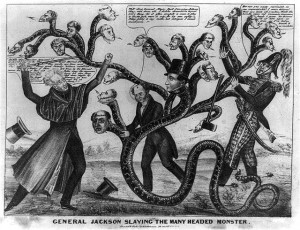
Slavery and the slave trade were central to the history of eighteenth- and nineteenth-century Philadelphia as the region economically benefited from the institution and dealt with tensions created by slave trading, slave holding, and abolitionism.
Sounds of the City: The Colonial Era
Despite William Penn’s vision of a city spread between the Delaware River and the Schuylkill, Philadelphia remained densely concentrated along the Delaware throughout the eighteenth century. Sounds from the private sphere and public life blended and intruded without hindrance: women’s batting staffs, street criers, and bells sounded loudly throughout the city’s domestic, commercial, and religious life.
Spanish-American Revolutions
As a port with longstanding commercial, cultural, and political connections with Spanish America, Philadelphia played a significant role in the era of Spanish-American revolutions in the late eighteenth and early nineteenth century. The City of Brotherly Love welcomed individuals escaping Spanish domination and helped to support their ideas about liberty, equality and independence.
Sports Mascots

Mascots are larger-than-life cheerleaders who encourage fans to root for the home team, laugh, and even have some fun at the expense of opponents. In Philadelphia, mascots have become as much a part of the fabric of sports culture as the city’s teams.
Workshop of the World (Theme Essay)

How will they know? How will future generations of Philadelphians have any inkling that their city once thrived as a premier manufacturing center, the fine products issuing from its shops, mills, and plants prized by customers around the nation and the world? Delving into the past is to find that the decline of Philadelphia manufacture is directly related to its rise, flip sides in effect of the same coin: of the strengths and weaknesses of a particular kind of industrial system that graced the city, one that rested by and large on the production of quality goods.
World War II

World War II, which created change for industries, populations, and politics in many urban areas in the United States, had a transforming effect on the Philadelphia region. Although the war caused many dislocations and cost the lives of 3,500 servicemen from the city and thousands more around the region, many look back on this era as a “golden age” of opportunity and prosperity.
Yellow Fever
For more than a century beginning in the late seventeenth century, sudden outbreaks of yellow fever sowed death and panic throughout Philadelphia and its environs. With medical science seemingly powerless against it, yellow fever was a terrifying and mysterious threat that rivaled any disease of the era in its capacity to take lives and disrupt society.