Essays » Events
Centennial Exhibition (1876)

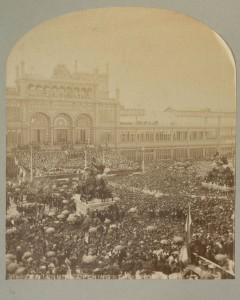
Modeled after the Crystal Palace Great Exhibition in London, and the first in a long line of major world’s fairs in the United States, the Centennial Exhibition in 1876 exhibited national pride and belief in the importance of education and progress through industrial innovation.
Civil War Sanitary Fairs

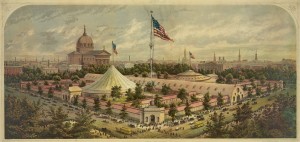
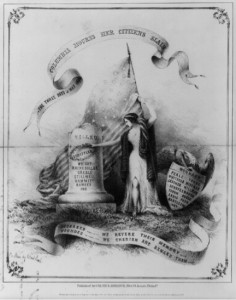
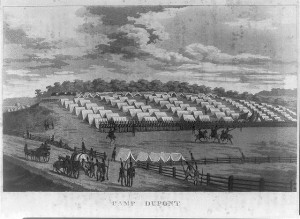
Philadelphia’s Civil War sanitary fairs represented the spirit of patriotic volunteerism that pervaded the city during the Civil War. These grassroots efforts, climaxed by the Great Central Fair of 1864 in Logan Square, provided a creative and communal means for ordinary citizens to promote the welfare of Union soldiers and dedicate themselves to the survival of the nation.
Constitution Commemorations

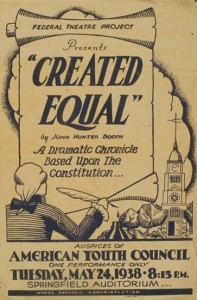
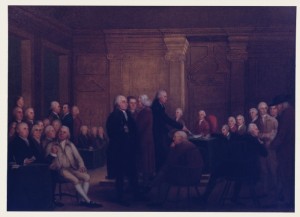
As a cause for commemoration, the signing of the U.S. Constitution historically has struggled to compete with the Declaration of Independence for national recognition and ardor. In Philadelphia, the site of the Constitutional Convention, commemoration of the document’s major anniversaries has reflected how regard for the Constitution and its connections to the city have evolved over time.
Continental Congresses
The First and Second Continental Congresses, held in Philadelphia in 1774 and 1775-81, engaged in the complex politics surrounding independence and heightened the city’s role in a world-changing moment in history.
French Revolution
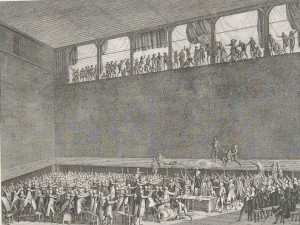
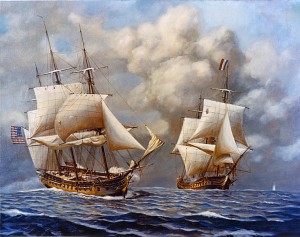
As the French Revolution of 1789 created political, social, and financial instability throughout Europe, many terrified French aristocrats, businessmen, and intellectuals fled to the United States. Philadelphia attracted many of the French émigrés, and the revolution and its repercussions captured the attention of Philadelphians during the city's decade as the nation's capital.
National Freedom Day

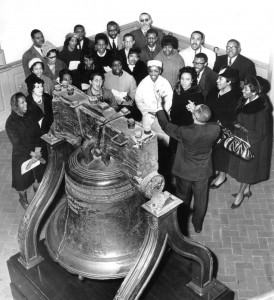
Created in 1942 by a Philadelphian born in slavery, the annual National Freedom Day commemoration each February 1 calls attention to the Thirteenth Amendment to the United States Constitution, which ended slavery, and the continuing struggle for African American justice and equality.
Pennsylvania Emancipation Exposition (1913)
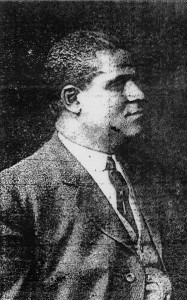
Held in 1913 in South Philadelphia, the Pennsylvania Emancipation Exposition marked the fiftieth anniversary of the Emancipation Proclamation with events and exhibits celebrating African American progress. At a time when the African American population in Philadelphia was growing and gaining in political influence, the event’s organizers also experienced a backlash of criticism as they secured $90,000 in state funds to stage the exposition.
Sesquicentennial International Exposition

In 1926, Philadelphia hosted the Sesquicentennial International Exposition, a world’s fair, to commemorate the one hundred and fiftieth anniversary of the signing of the Declaration of Independence. Although it opened to great fanfare, the exposition failed to attract enough visitors to cover its costs.
World War II

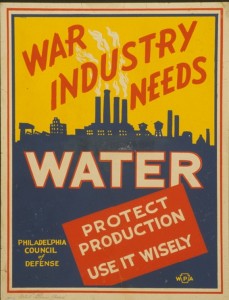
World War II, which created change for industries, populations, and politics in many urban areas in the United States, had a transforming effect on the Philadelphia region. Although the war caused many dislocations and cost the lives of 3,500 servicemen from the city and thousands more around the region, many look back on this era as a “golden age” of opportunity and prosperity.