Insurance
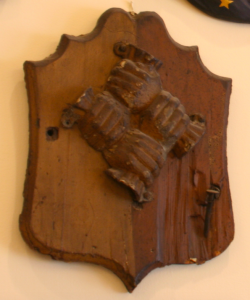
Insurance is sometimes called an "invisible" element of commerce, but the development of insurance products in Philadelphia changed the way the city developed and connected Philadelphia to larger financial markets around the ...
Insurance is sometimes called an "invisible" element of commerce, but the development of insurance products in Philadelphia changed the way the city developed and connected Philadelphia to larger financial markets around the ...
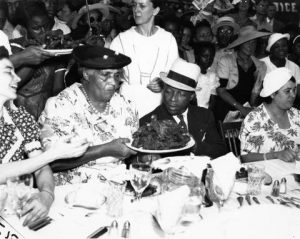
The International Peace Mission Movement, an American communitarian religion founded in the early decades of the twentieth century, established a significant presence in Philadelphia under the leadership of its African American minister, the Reverend Major Jealous Divine, better known as Father Divine (1879?-1965). As an American sectarian religious innovator, Father Divine reached the height of ...
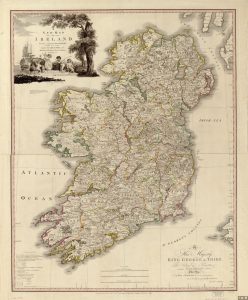
Contacts between the Philadelphia region and Ireland began in the late seventeenth century, shortly after the creation of Penn’s colony. Long a part of the urban fabric of Philadelphia, Irish Catholics endured nativist assaults of the Bible Riots of 1844 and did not see one of their own become mayor until James H. J. Tate, who served from 1962 to 1972. By the twenty-first century, the Irish ...
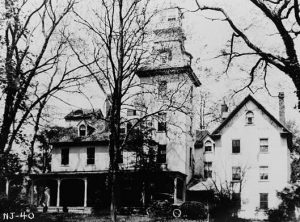
Long before western Pennsylvania dominated the American iron and steel industries, southeastern Pennsylvania and southern New Jersey became the epicenter of colonial iron production. In a little over forty years beginning in 1716, Pennsylvania ironmasters erected nearly fifty furnaces and forges for producing iron stock and goods, and by 1840 the region’s national preeminence had been ...
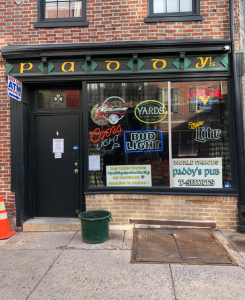
It’s Always Sunny in Philadelphia, a comedy series that premiered on the FX cable television channel in August 2005, follows a group of five friends as they engage in narcissistic and questionable schemes from their Irish bar, Paddy’s Pub, fictionally located at Dickinson and Third Street in South Philadelphia. Created by executive producer Rob McElhenney ...
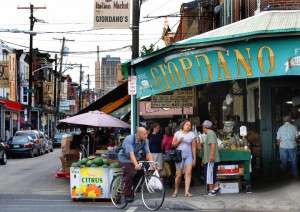
The Italian Market, located in the Bella Vista neighborhood of South Philadelphia, is the popular name for the food shops and curbside stands on Ninth Street between Fitzwater and Wharton Streets, where merchants sell fresh produce, prepared foods, imported products, goods, and equipment for both household and commercial ...
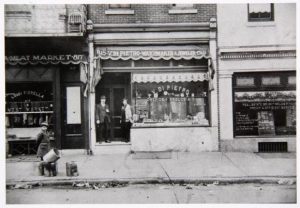
Although ties between Italy and Greater Philadelphia stretched back generations, it was not until the second half of the nineteenth century that Italian migration increased to the extent of forming visible points of settlement in the area. Over time, loosely connected clusters of Italian people in various neighborhoods, mainly in South Philadelphia, coalesced into a ...
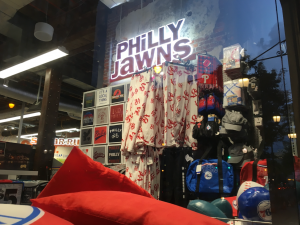
Jawn is a neutral, all-purpose noun used to reference any person, place, situation, or object. In casual conversation, it takes the place of the word thing. Contrary to popular belief, jawn did not entirely originate in Philadelphia, but developed locally as a variant pronunciation of joint in African American vernacular ...
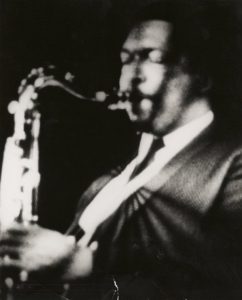
Jazz began to emerge as a distinct musical style around the turn of the twentieth century, a merging of two vernacular African American musical styles—ragtime and blues—with elements of popular music. New Orleans, the “cradle of jazz,” was the most important city in this process, with Chicago and New York playing particularly significant roles in ...
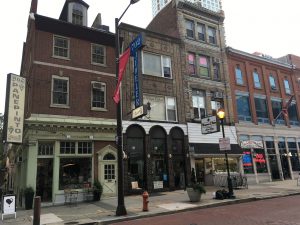
Jewelers Row in Center City Philadelphia emerged in the 1880s and over time became home to more than two hundred jewelry retailers, wholesalers, and craftsmen. Many of these businesses were owned by the same families for generations. By the twenty-first century, Jewelers Row had become regarded as the oldest diamond district in the United States, ...
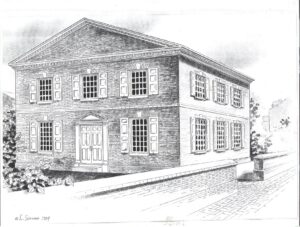
From the colonial era to the twenty-first century, Jews in the greater Philadelphia area participated in, and contributed to, many aspects of the region’s life. They founded a myriad of synagogues and Jewish organizations, ranging from those with a religious or educational purpose to those encouraging civic engagement and historical awareness. Members of the Philadelphia Jewish community ...
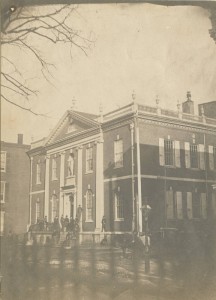
In Philadelphia in 1727 Benjamin Franklin (1706-90) founded the Junto as a club for “mutual improvement,” inviting acquaintances to meet weekly to discuss intellectual and moral issues. From these discussions emerged inspiration for many Philadelphia institutions including the American Philosophical Society, the Library Company of Philadelphia, a fire company, and the University of ...
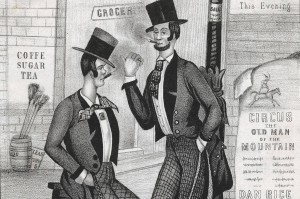
The Killers is a sensational urban gothic tale written by the journalist, novelist, and labor activist George Lippard (1822-54) in 1849. It exposes Philadelphia’s class and racial conflicts and its gang warfare, criticizes corruption in government and finance, and lambasts the city’s new experiment in incarceration, the solitary confinement system of Eastern State ...
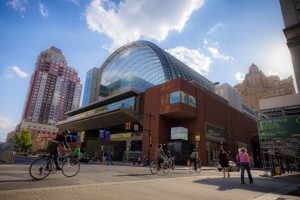
The Kimmel Center for the Performing Arts was designed as the centerpiece of the Avenue of the Arts, a rebranded stretch of Broad Street devoted to performing arts venues. Built by a partnership of public and private entities, the Kimmel Center was part of a wider plan to revitalize Center City via the construction of new entertainment attractions. Since it opened at Broad and Spruce Streets ...
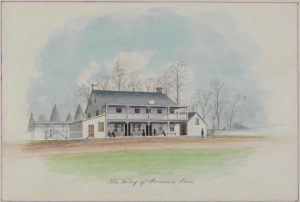
Twenty miles northwest of downtown Philadelphia, where the Pennsylvania Turnpike converges with the Schuylkill Expressway, a sleepy rural town clustered around a colonial-era tavern expanded massively in the twentieth century to become the region’s largest employment hub outside of Center City ...
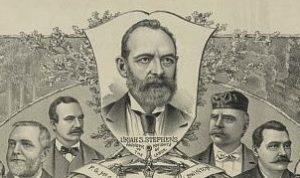
The Knights of Labor, the first national industrial union in the United States, was founded in Philadelphia on December 9, 1869, by Uriah Stephens (1821-82) and eight other Philadelphia garment cutters. Intended to overcome the limitations of craft unions, the organization was designed to include all those who toiled with their hands. By mid-1886 nearly one million laborers called themselves ...
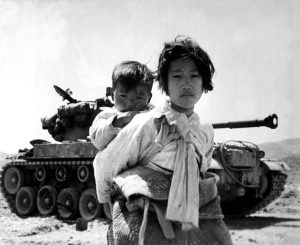
Although active hostilities during the Korean War lasted for little more than three years (1950-53), the conflict had a lasting impact on the Philadelphia area. The war provided a boost for the shipbuilding industry on both sides of the Delaware River, and military bases played a major role in preparing soldiers and supplies for deployment. ...
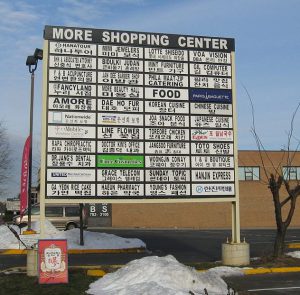
Although a few Korean migrants came to the Greater Philadelphia region in the early twentieth century to study in universities, Koreans became one of the top ten new immigrant groups in the region by 1970. The new U.S.-Korea relationship formed during the Korean War led to increased exchanges between the two countries, and the 1965 ...
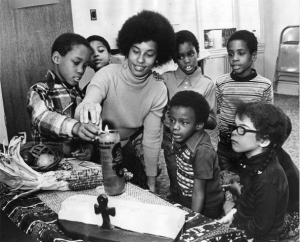
Because of its large African American population and the presence and influence of prominent Black Nationalist individuals and organizations, the Philadelphia area has been especially active in celebrating Kwanzaa, an African cultural holiday that emerged out of the Black Nationalist Movement of the ...
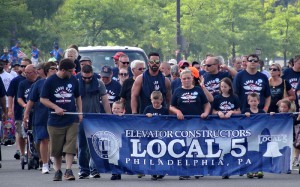
Labor Day, celebrated the first Monday of September, has been observed in the Philadelphia region since the 1880s, before it became a nationwide holiday. New Jersey was one of the first states to grant Labor Day legal status in 1887, and Pennsylvania followed suit by the end of the decade. The earliest incarnations of Labor Day grew from unrest among industrial laborers, but over time the holiday ...
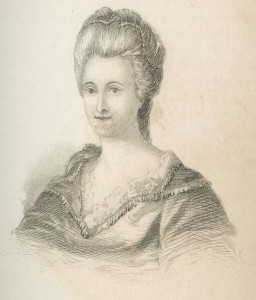
On June 12, 1780, Esther De Berdt Reed (1746-80), penned a broadside entitled “Sentiments of an American Woman” in order to rouse her fellow women to participate in the Revolutionary cause. As a result, dozens of women responded to Reed’s call, forming the Ladies Association of Philadelphia, a group of upper-class women who led a door-to-door campaign raising money for Washington’s ...
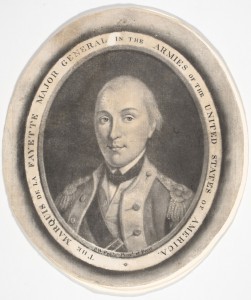
When the Marquis de Lafayette (1757-1834), a French hero of the American Revolution, returned to the United States in 1824-25, Philadelphians joined in a wave of nationwide affection for the nobleman who had volunteered for service in the Continental Army at the age of 19. Lafayette’s return to the region stirred increasing regard for preserving relics of the Revolution, especially the old ...
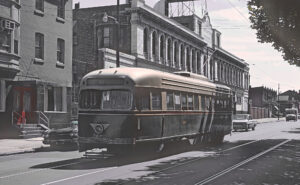
Extending through West Philadelphia into Philadelphia’s western suburbs, Lancaster Avenue has defined a corridor for commerce and community development from the colonial era to the twenty-first ...

Like many other towns and cities across the United States, municipalities in the Philadelphia region adopted the sanitary landfill as a primary refuse-disposal strategy in the mid- to late twentieth century. Intended to replace open dumps, landfills also promised to serve the disposal needs of a rapidly growing suburban population. From the 1950s to the ...
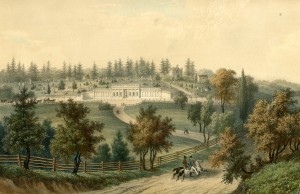
Founded in 1836 as an alternative to the overcrowded churchyards of rapidly growing Philadelphia, Laurel Hill Cemetery was the first rural cemetery for the city and the second in the United States. With monuments designed by the era’s most prominent sculptors and architects, it served as elite Philadelphia’s preferred burial place for over a ...
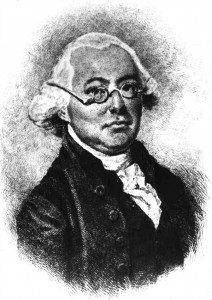
From its earliest days as an English colony, Pennsylvania needed lawyers to run the government, settle disputes, and keep the peace. As Philadelphia became a large city and important commercial, insurance, banking, and shipping center on the eve of the American Revolution, its lawyers were crucial to every civic endeavor, including the making of a new nation. With the dawning of the Industrial ...
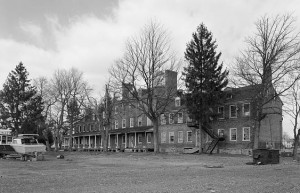
Situated roughly ten miles south of Philadelphia, in Essington, on the west bank of the Delaware River, the Lazaretto is considered to be the oldest and last surviving quarantine station in the United ...
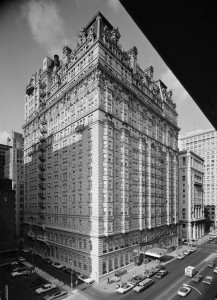
The outbreak of a mysterious pneumonia-like disease in the Philadelphia region in the summer of 1976 puzzled doctors and public health officials. Many of the sick had attended an American Legion convention at the Bellevue-Stratford Hotel, giving the new illness the name “Legionnaires’ disease.” Months later, doctors discovered that bacteria in the hotel’s air conditioning ...
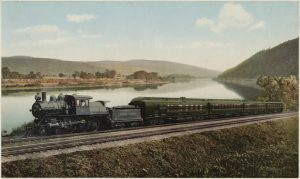
Over the centuries, strong ties of transport, investment, and culture grew between the Greater Philadelphia region and the Lehigh Valley. The valley was carved by retreating glaciers twenty thousand years ago and maintained by its namesake river running from the Pocono Mountains, through Blue Mountain, south and east into the Delaware River. Only in recent ...
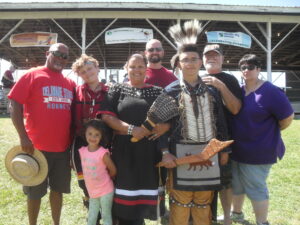
As the original inhabitants of Pennsylvania, Delaware, New York, and New Jersey, the Lenape people have maintained an enduring presence in the region and a role in its development and heritage. Despite displacements through coercion and force during the nineteenth century, Lenape people remained in the Delaware ...
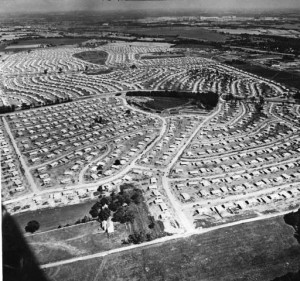
The iconic Levittown communities–the first in Long Island, New York, and the subsequent two in Bucks County, Pennsylvania, and Burlington County, New Jersey–endure as symbols of the unique character of post-World War II U.S. suburban development. A confluence of forces encouraged the particular nature of these large-scale, mass-produced, low-cost suburban tract housing developments, including ...
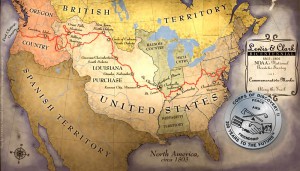
While Meriwether Lewis and William Clark became well-known for crossing the Rocky Mountains and canoeing across the Columbia River in the West, the inspiration for their Corps of Discovery Expedition (1803-1806), better known as the Lewis and Clark Expedition, emerged from Philadelphia's libraries and scientific ...
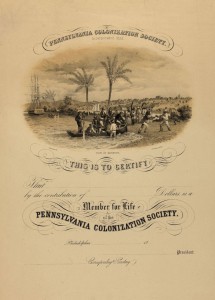
Liberia; Or, Mr. Peyton's Experiments (1853) is a hybrid work containing fiction, history, and biography along with transcriptions of documents on Liberia. The work argued that free blacks could not prosper in North America but had opportunities for advancement and self-determination in Liberia, a black Christian republic. The Americo-Liberian settlers would not only rise themselves but would ...
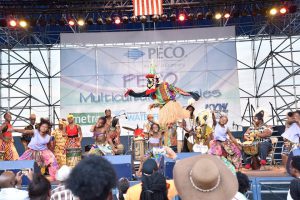
Greater Philadelphia has had close links to Liberia in many eras. Free blacks and abolitionists from the region helped colonize and underwrite the nation of Liberia’s founding in the early nineteenth century. Yet Philadelphia and Liberia had little connection between the mid-nineteenth and late twentieth century. Most Liberian settlement in the region resulted from the Liberian civil war of ...
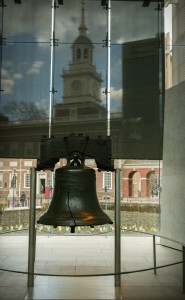
It began inconspicuously as a two-thousand-pound mass of unstable metal; it nearly ended up in the scrap heap; it cracked and lost its voice; it was all but forgotten. But then, gradually, it became a priceless national treasure. For more than a century, the Liberty Bell has captured Americans’ affections and become a stand-in for the nation’s vaunted values: independence, freedom, ...
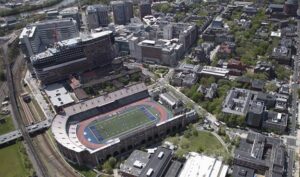
During the Cold War, conflict between the global superpowers of the United States and the Soviet Union took many forms, including sports. One such theater was Franklin Field on the campus of the University of Pennsylvania, which hosted an international track and field athletic competition known as the Liberty Bell ...
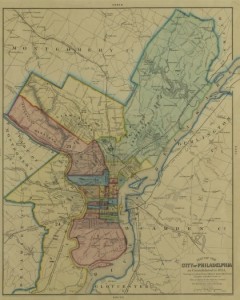
City and state politicians representing Northeast Philadelphia, deeply unsettled by the shifting economy and demographic makeup of the city in the 1980s, proposed seceding to create “Liberty County,” a separate, suburban municipality to ostensibly address taxpayers’ demands for improved municipal services. The primary impetus for such a radical step, however, was reaction to ...
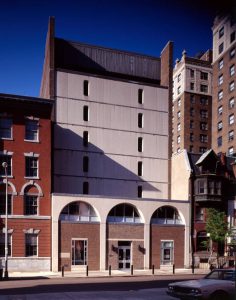
With a handful of like-minded associates, the twenty-one-year-old Benjamin Franklin (1706–90) formed a self-improvement club in 1727. By reading, conversing, and improving their minds, members of the Junto believed they would also improve their circumstances, their social position, and their community. Four years later, much the same group institutionalized edification and self-improvement by ...
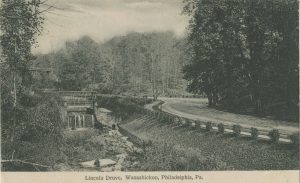
The 4.1 miles of Lincoln Drive that link Philadelphia’s northwest neighborhoods to Center City was built in three distinct segments over the course of five decades in the late nineteenth and early twentieth centuries. At its south end, a winding mid-nineteenth-century section along the Wissahickon Creek was originally constructed to provide access to water-powered industrial mills. A middle, ...
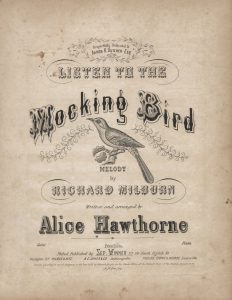
Written in 1855 by a Philadelphia songwriter who was inspired by the whistling of a street musician, “Listen to the Mocking Bird” was one of the most popular songs of the nineteenth century. It sold millions of copies of sheet music and was sung (and whistled) throughout the United States and parts of Europe. Philadelphia ...
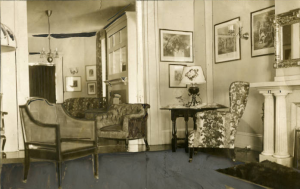
Philadelphia’s literary societies typically have combined the social with the intellectual and artistic, with ongoing shifts in the balance between the two. As descendants succeeded the founding members, they prized the relationships and traditions handed down over generations, perhaps more than the original literary pretext of the organization. Philadelphia has often been described as a ...
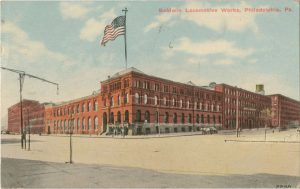
For over one hundred and twenty years, railway locomotives were built in Greater Philadelphia. From the pioneering manufacturers of steam locomotives in the Spring Garden section of the city in the 1830s to the sprawling plant of the Baldwin Locomotive Works in Delaware County in the twentieth century, the products, the companies, and the buildings ...
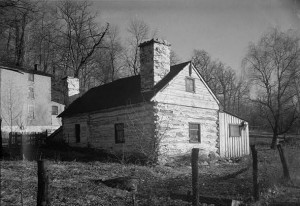
The Philadelphia region served as an important diffusion ground for log cabins in America as Swedes, Finns, and later Germans transposed their traditional building practices to the Delaware Valley, melding old-world models with the bounty of timber but adapting to the lack of tools and skilled craftsmen. By the mid-nineteenth century, log cabins had become ...
Lotteries have a long and controversial history in the Philadelphia region. Since the early eighteenth century, random drawings of numbers have funded charities and clubs, paid for roads and schools, settled estates, distributed land, and promoted various private and state-run initiatives. Lotteries have drawn multitudes of customers seeking cash and other prizes, but over three centuries, they ...
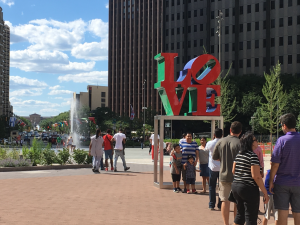
The sculpture commonly known as “the LOVE statue,” first placed in Philadelphia’s John F. Kennedy Plaza for the 1976 Bicentennial, was not the only sculpture of its kind—by the twenty-first century, it was not even the only sculpture of its type in Philadelphia. Yet LOVE, by Robert Indiana (1928-2018), came to be embraced by Philadelphians ...
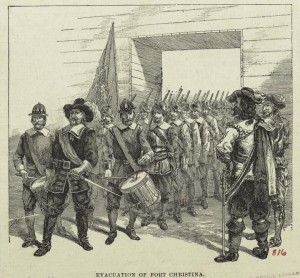
The area that ultimately became the state of Delaware was a contested borderland between north and south, as a dozen native and colonial political and commercial regimes sought to assert authority over the region. William Penn ultimately gained control of the area as an addition to his land grant for ...
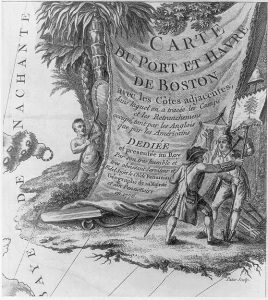
During the American Revolution, Loyalists, or “Tories” as Patriots called them, included prominent Pennsylvania political and religious leaders as well as many less affluent individuals from the state’s Quaker and German pacifist communities. A large number of “neutrals” also struggled with increasing difficulty to remain uninvolved in the conflict. Religion, ethnicity, economic status, ...
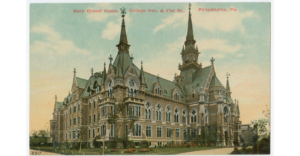
Lutherans came early to the Philadelphia region as economic opportunities provided them with possibilities that their homelands could not offer. Once settled, they worked to transplant their spirituality in their new homeland. To that end, they established congregations, a synod, social ministry organizations, and a seminary that ministered to them and their descendants. The presence ...
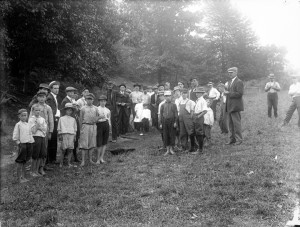
Lynching, the extralegal killing of a victim by individuals or a mob, was commonplace in the United States at the turn of the twentieth century. Though counts vary, in the heyday of lynching following the Civil War, at least 3,500 incidents were recorded; more than 80 percent occurred in the American South and targeted African Americans. Though less frequently, lynchings also occurred in ...
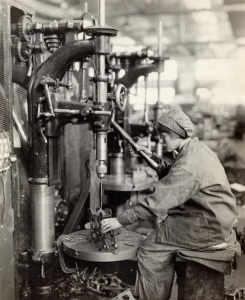
Hundreds of machine shops, large and small, built and maintained Philadelphia’s position as the “Workshop of the World” through the nineteenth and twentieth centuries. In the city and beyond, especially in Conshohocken, Pottstown, Phoenixville, Chester, and Camden, machining made the Delaware Valley a hub of foundries, craft shops, mills, workshops, and manufactories. During the latter ...
Connecting the Past with the Present, Building Community, Creating a Legacy